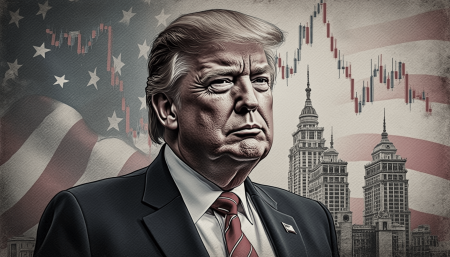



As discussions around the economy intensify, this editorial sheds light on the looming Trump Recession. With a near 50% chance of a recession this year, according to former US Treasury Secretary Lawrence H. Summers, the implications of Trump’s trade war and economic policies are at the forefront of economic uncertainty.
The economic landscape is shifting, and the numbers are telling a compelling story. Recent data points to a deceleration across various sectors, raising alarms about the potential onset of a Trump Recession. Consumer spending, a crucial driver of economic growth, has started to wane. Reports indicate a notable decline in retail sales and a dip in consumer confidence, as households grapple with rising costs and uncertainty.
Moreover, business investments are faltering. Companies are exhibiting caution, scaling back on expansion plans and delaying capital expenditures. This trend is evident in sectors that typically thrive during economic upturns, such as manufacturing and construction. The latest figures show a contraction in new orders, suggesting that businesses are bracing for tougher times ahead.
As the economic climate changes, consumer behavior reflects a growing unease. The sentiment that once buoyed spending is diminishing. Households are prioritizing savings over discretionary spending, a clear indication of their concerns about future economic stability. The shift in behavior is not just a fleeting response; it signals a deeper anxiety about job security and financial health.
Perception Shift Since Trump’s Inauguration
Since Donald Trump’s inauguration, public perception of the economy has undergone a dramatic transformation. Initially, optimism reigned, fueled by promises of tax cuts and deregulation. However, as policies began to unfold, the narrative shifted. A sense of apprehension has taken hold, particularly among consumers and investors.
The once-celebrated economic exceptionalism is now viewed through a lens of skepticism. The trade war and tariffs have fostered an environment of uncertainty, shaking the foundations of established economic relationships. As a result, confidence has eroded, with many questioning the sustainability of growth under the current administration.
Impact of Rhetoric on Confidence
Trump’s rhetoric, often characterized by bold declarations, has not instilled the confidence many anticipated. Instead, it has raised concerns about policy consistency and long-term economic direction. The unpredictability of government action has left businesses hesitant to invest, further compounding the risks associated with a potential recession.
Factors Leading to Economic Slowdown
Several interconnected factors are contributing to the current economic slowdown. First and foremost, the imposition of tariffs has disrupted supply chains. These disruptions have not only increased costs for manufacturers but have also led to higher prices for consumers. As companies pass these costs onto consumers, spending power diminishes, stifling economic growth.
Additionally, the tightening immigration policies have further exacerbated labor shortages in key industries. This has created a ripple effect, limiting production capabilities and driving up wages, which in turn impacts consumer prices. The cumulative effect of these policies is a slower-growing economy, with the specter of the Trump Recession looming larger.
The Role of Global Competitiveness
The U.S. economy’s competitiveness on the global stage is also at risk. As trade relations become strained, American businesses find themselves at a disadvantage. The inability to leverage partnerships with neighboring countries like Canada and Mexico limits access to vital markets and resources. This isolationist approach undermines the very essence of a robust economy, which thrives on collaboration and trade.
Recession Probability Analysis
Current economic indicators suggest that the probability of a recession is alarmingly high. Analysts estimate that there is still slightly below a 50% chance of a recession occurring within the year. This assessment is grounded in a series of negative trends, including declining manufacturing output and a slowdown in job growth.
The yield curve, a crucial indicator of economic health, is also signaling caution. An inverted yield curve often precedes a recession, and recent data shows signs of this inversion as investor confidence wanes. The more the market anticipates aggressive interest rate cuts by the Federal Reserve, the stronger the signal becomes that a recession could be on the horizon.
Key Economic Indicators to Monitor
- Yield Curve: Watch for shifts in the yield curve, particularly inversions, which historically indicate an impending recession.
- Consumer Spending: Monitor retail sales and consumer confidence indices for signs of weakening demand.
- Business Investment: Keep an eye on capital expenditure reports and new order data to gauge business sentiment.
- Employment Rates: Track job growth and unemployment figures as they are pivotal in assessing economic health.
- Commodity Prices: Fluctuations in commodity prices can indicate shifts in demand and economic activity.
Impact of Policy Uncertainty
Policy uncertainty is a critical factor influencing economic performance. The unpredictable nature of Trump’s administration has created an environment where businesses are hesitant to commit to long-term investments. Each policy shift or tweet can send ripples through the markets, causing businesses to pause and reassess their strategies.
Moreover, the lack of clarity surrounding trade agreements and tariffs leads to a chilling effect on investment. Companies are reluctant to expand or hire when they cannot accurately forecast the economic landscape. This uncertainty not only affects large corporations but also trickles down to small businesses, which are often the backbone of the economy.
The Need for Stability
For the economy to regain its footing, a return to stability is essential. Businesses need to feel confident in their operational environment. Clear and consistent policies can help restore that confidence, enabling companies to invest and innovate. Without this stability, the risk of a Trump Recession looms ever larger, threatening the livelihoods of millions.
Questioning the Transition Period
According to former US Treasury Secretary Lawrence H. Summers, the notion of a “transition period” touted by the Trump administration raises eyebrows. It implies a temporary phase of economic adjustment, yet the underlying realities suggest otherwise. This rhetoric may serve to placate concerns but fails to address the long-term implications of such policies.
As the economy grapples with challenges, the question remains: is this transition truly necessary? Or is it merely a convenient excuse for the administration’s missteps? The evidence points toward a more alarming trend, one that suggests a deeper malaise rather than a fleeting adjustment.
Reality Check on Economic Assumptions
Many argue that the transition is about rebalancing the economy. However, the reality is stark. Policies that disrupt established trade relationships and impose tariffs do not simply transition the economy; they fundamentally alter it. The expectation of a manufacturing renaissance, for instance, stands on shaky ground when viewed against historical trends.
Manufacturing in the U.S. has been on a decline for decades, and the belief that tariffs will reverse this trend is misguided. Instead of fostering growth, these policies often lead to increased costs, which can stifle production and ultimately reduce competitiveness in the global market.
Concerns Over Manufacturing Base Revival
Despite the administration’s assertions, the revival of the manufacturing base appears more illusory than real. The idea that tariffs will stimulate domestic production overlooks the complexities of modern supply chains. In today’s economy, manufacturing relies heavily on global partnerships.
When tariffs are imposed, they raise the costs of essential inputs, making it harder for manufacturers to compete. This protectionist approach fails to recognize that many industries rely on materials sourced from abroad, and raising prices on these inputs can lead to a cascade of negative effects.
The Illusion of Job Creation
Proponents of the manufacturing revival often cite job creation as a primary goal. Yet, the reality is that the automation of production processes continues to reshape the labor landscape. While some jobs may be created in the short term, the long-term trend indicates a continued decline in manufacturing jobs.
As industries evolve, the demand for skilled labor will increase while the need for unskilled labor diminishes. Thus, the promise of a manufacturing renaissance may not translate into widespread job creation, leaving many workers in precarious positions.
Tariffs and Their Economic Impact
The imposition of tariffs has far-reaching implications that extend beyond mere trade balances. By increasing costs for manufacturers, tariffs inevitably lead to higher prices for consumers. This cycle of rising expenses can erode purchasing power, ultimately stifling economic growth.
Moreover, the retaliatory tariffs imposed by other nations can further complicate the situation. As countries respond to U.S. tariffs with their own, American businesses face a challenging landscape, limiting their access to crucial markets and resources.
Long-Term Consequences of Protectionism
Protectionist policies may yield short-term gains, but the long-term consequences often tell a different story. The disruption of established supply chains can lead to inefficiencies, reduced innovation, and a weakened competitive position on the global stage. Businesses that once thrived in an interconnected economy may find themselves struggling to adapt.
Ultimately, the protectionist approach taken by the Trump administration risks creating a fragmented economy, one that is less resilient and more vulnerable to shocks. This could exacerbate the very issues it seeks to resolve, leading to a deeper economic malaise.
Federal Reserve’s Response to Economic Projections
As the economic landscape shifts, the Federal Reserve finds itself in a precarious position. With uncertainty looming, the Fed faces the challenge of issuing economic projections that accurately reflect the current climate. The consensus appears to be moving downward, suggesting a growing recognition of the risks at play.
In this context, the Fed’s decisions must strike a balance between responding to economic signals and maintaining market confidence. A misstep could lead to further erosion of trust in monetary policy, complicating the path to recovery.
Managing Expectations Amidst Uncertainty
The Fed’s ability to navigate this uncertainty will be crucial. Policymakers must communicate clearly, emphasizing the importance of stable economic performance rather than short-term fixes. As they assess the evolving situation, their focus should remain on fostering an environment conducive to sustainable growth.
Moreover, the Fed’s response to market expectations regarding interest rates will play a pivotal role. A premature signal of aggressive rate cuts could exacerbate concerns about economic health, leading to a further decline in consumer and business confidence.
The Central Test of Economic Policy
As we analyze the current economic climate, it becomes evident that the central test of economic policy lies in its performance outcomes. The Trump administration’s approach, characterized by volatility and unpredictability, raises questions about its effectiveness.
Ultimately, the measure of success should not be the level of interest rates or stock market performance but rather the tangible improvements in economic conditions. A focus on stable growth, job creation, and robust consumer confidence is essential for a healthy economy.
Looking Ahead: The Need for Coherent Policy
For the economy to regain its footing, coherent and consistent policies are imperative. As uncertainty mounts, businesses need clarity to make informed decisions. The prospect of a Trump Recession looms large, and only through decisive action can we hope to avert its full impact.
In conclusion, the challenges ahead require a shift in focus. Rather than relying on protectionist measures, embracing collaboration and open trade will be vital. The future of the U.S. economy hinges on its ability to adapt and innovate in a rapidly changing world.